
Eden Prairie, MN
Eden Prairie Garage Door Guide
Why Cold Weather Breaks Garage Door Springs in Eden Prairie
Eden Prairie's garage doors run mostly on original 1960s-70s hardware. Here's why cold weather snaps torsion springs first, and what to check before the next cold snap.
- Licensed & Insured
- Same-Area Service Calls
- Upfront Pricing
The Problem
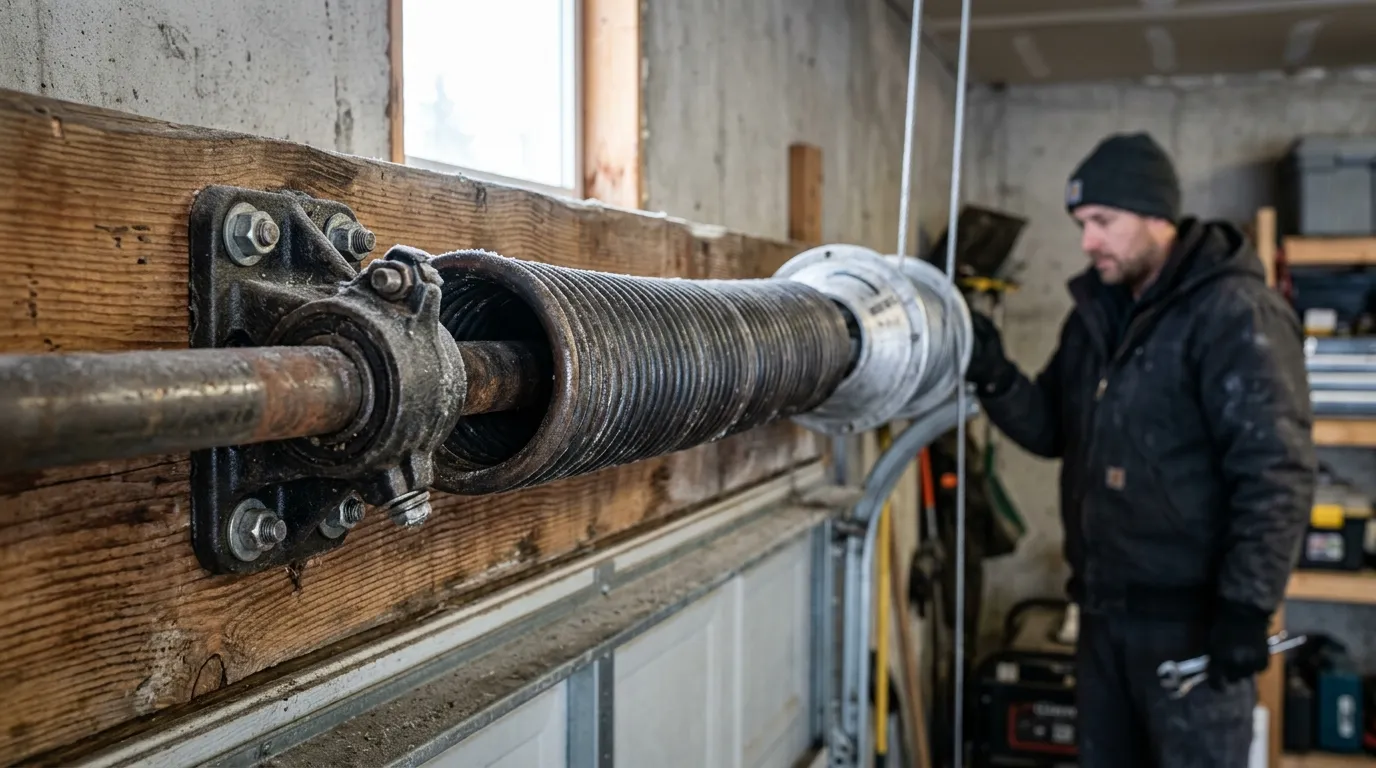
A torsion spring doesn't care about the calendar. It cares about how many times it's been wound and unwound, and how brittle the steel has gotten.
Eden Prairie's housing stock mostly went up between 1957 and 2005, with a median year of 1977, meaning tens of thousands of garage door springs installed during the original build are now pushing 50 years old. Steel fatigues with every cycle, and a spring built during the Ford administration has seen a lot of cycles.
Across the 43 named areas that make up this service territory, most homes date to the 1960s and 70s, which is exactly the era of torsion spring winding still hanging in a lot of these garages. Some owners have replaced springs once, maybe twice, since then. Plenty haven't.
The spring holds until it doesn't, and when it lets go, it's almost always on the coldest morning of the year, not the mildest one. That's not superstition. Cold steel is stiffer and more prone to sudden failure than warm steel, and old cold steel is worse.
What Local Conditions Do
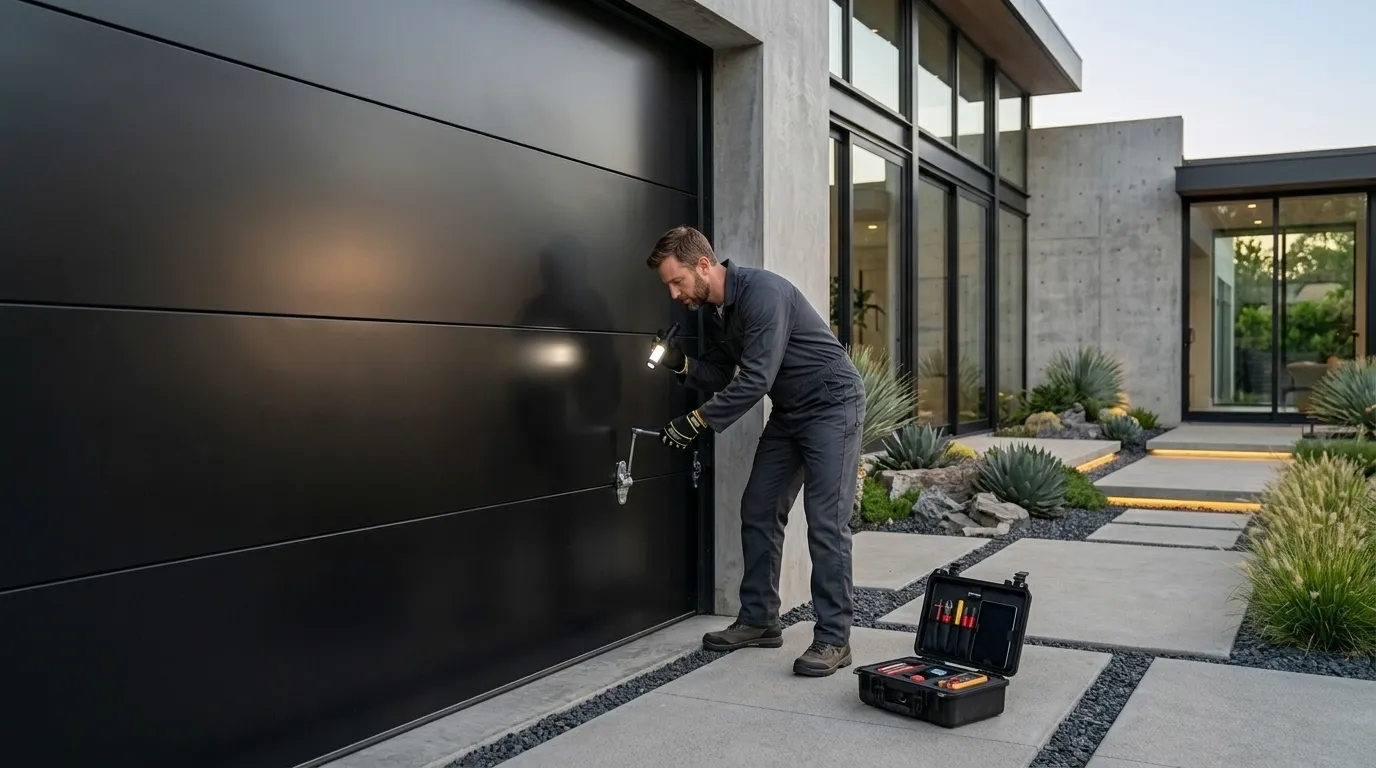
Eden Prairie sits in a COLD severe climate band, where steel torsion springs lose flexibility and are far more likely to snap on the coldest mornings of the year. The lubricant that keeps coils sliding against each other thickens in low temperatures, which raises the friction the spring has to overcome on every single lift. A spring already near the end of its coil life doesn't need much extra load to go.
Moisture matters too. Garages that see snowmelt off car undercarriages all winter get humidity swings that speed up rust at the ends of the coil, right where the spring is under the most stress. Once rust pits the metal, that spot becomes the weak point, and it's usually where the break happens.
None of this shows up as a dramatic warning. The spring looks fine until the morning it isn't, and the door simply won't lift, or lifts crooked because one spring on a double-spring setup let go and the other is carrying the whole panel.
What Changes With the Season
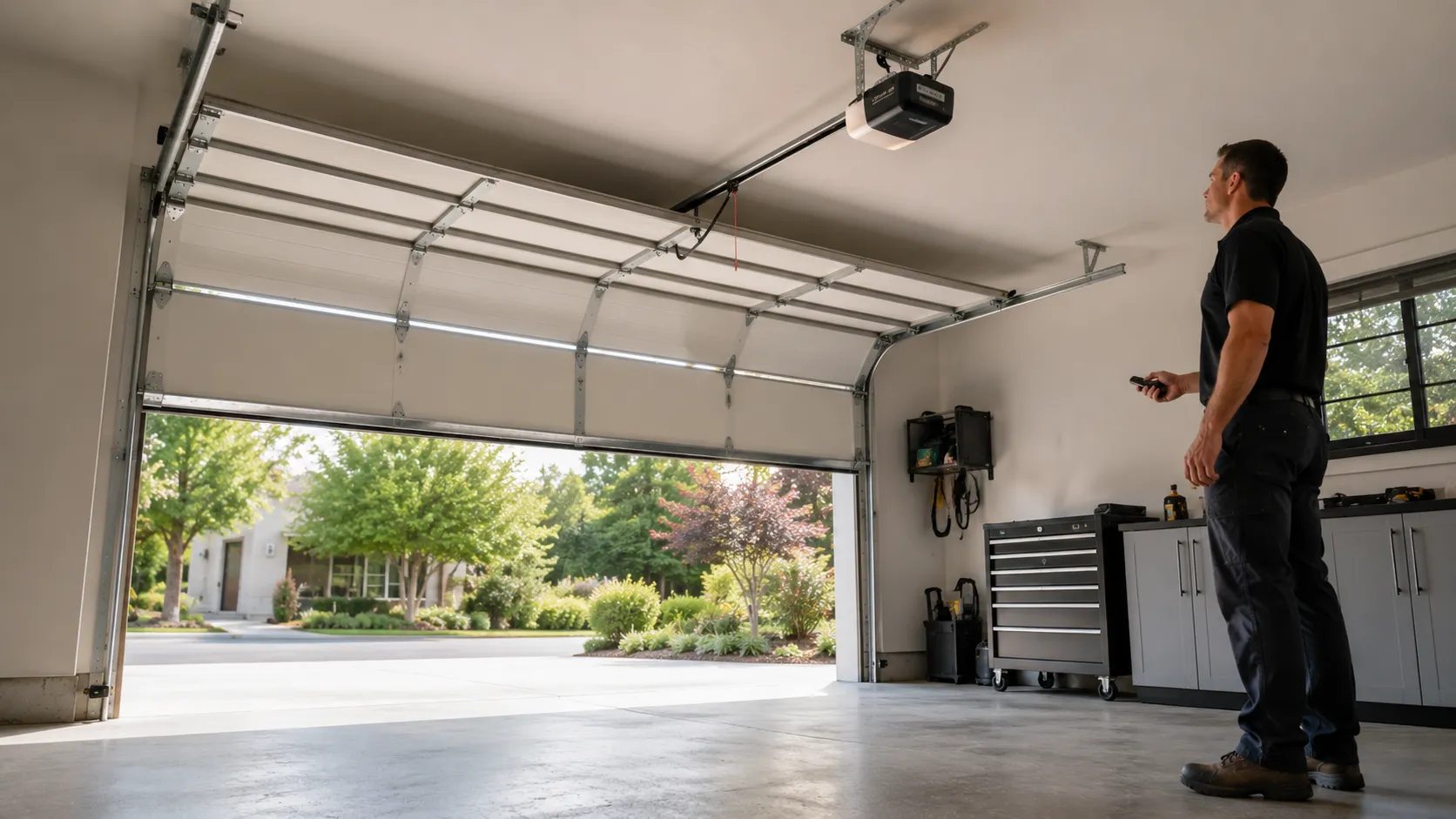
The mechanical cycle count on a garage door doesn't change much between July and January, but the load on the spring does. Cold makes the door itself heavier to move in a practical sense, because grease in the rollers and track hardens, and the opener motor has to work harder to compensate. That extra strain gets transferred straight to the spring, which is already the most fatigued part in the system.
With 102,257 owner-occupied houses across this service area, a large share of the doors on those garages are original equipment nearing the end of a normal spring's life, and winter is when that shows. Homes in nearby Chanhassen, Excelsior, and Shorewood share the same 1960s-70s build era, so the same cold-weather spring failures show up there too.
It's not a coincidence tied to one street or one subdivision. It's a build-era problem meeting a climate problem at the same time every year, usually in the stretch of hardest cold.
What to Look At First
Before a spring breaks outright, it usually gives some warning if you know where to look. Check the coil for visible gaps between winds, uneven spacing, or a section that looks flattened compared to the rest.
Rust concentrated at either end of the spring, where it meets the winding cone, is a sign the metal there is weaker than the rest of the coil. A door that's started closing unevenly or dropping suddenly for the last inch is often telling you one spring is already failing while the other is still holding.
Here's the honest limit: a spring that's fatigued from age isn't something you fix by lubricating it. Once a torsion spring is worn out, replacement is the only real option, not a repair, and trying to stretch its life with oil just delays a failure that's coming. Given a median household income of $104,929 in this area, most owners here replace both springs on a double-spring setup at once rather than wait for the second one to go a year later, which tends to be the cheaper path over time.
How We Can Help
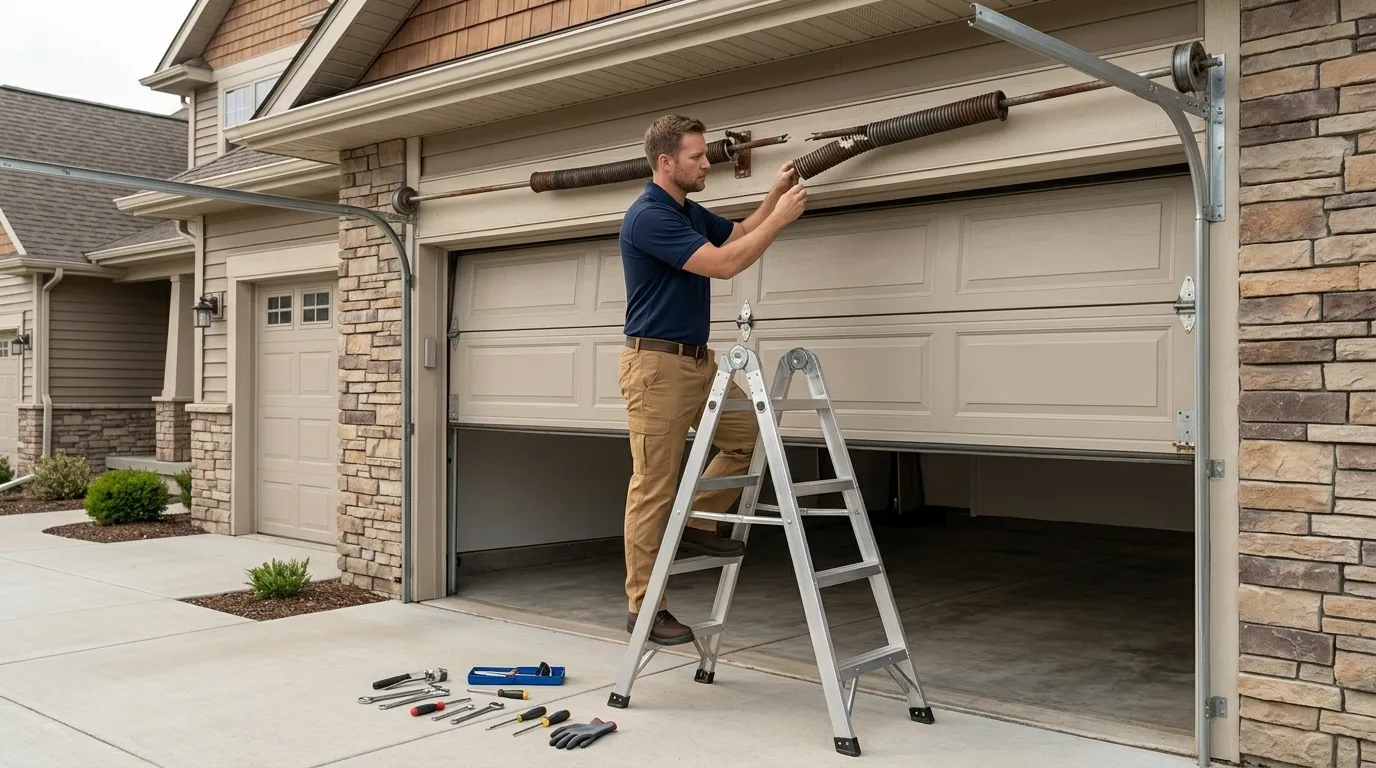
Garage Door Repair
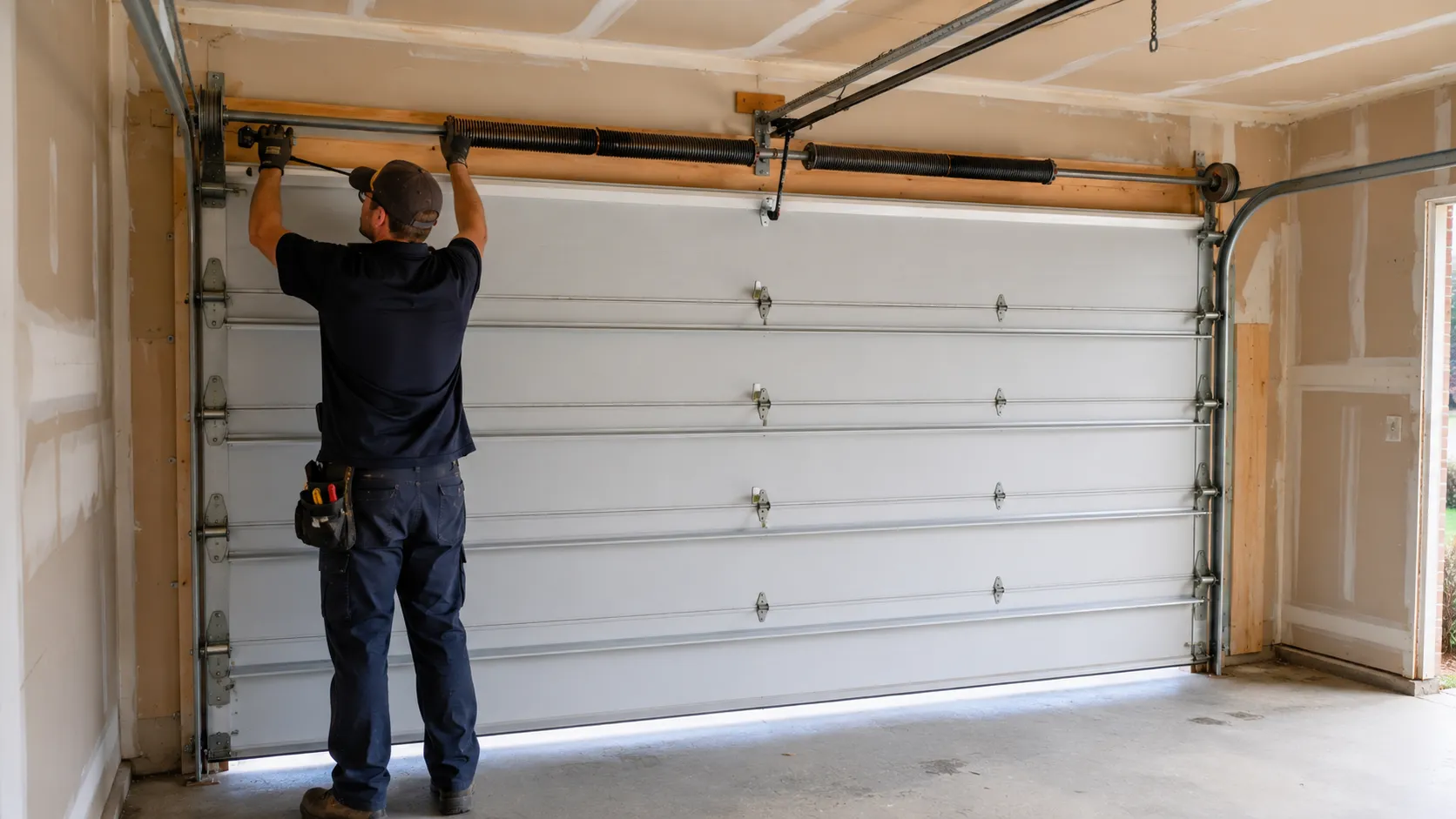
Springs, cables, tracks, rollers, and openers fixed by a tech who explains the problem before touching anything.
Learn more →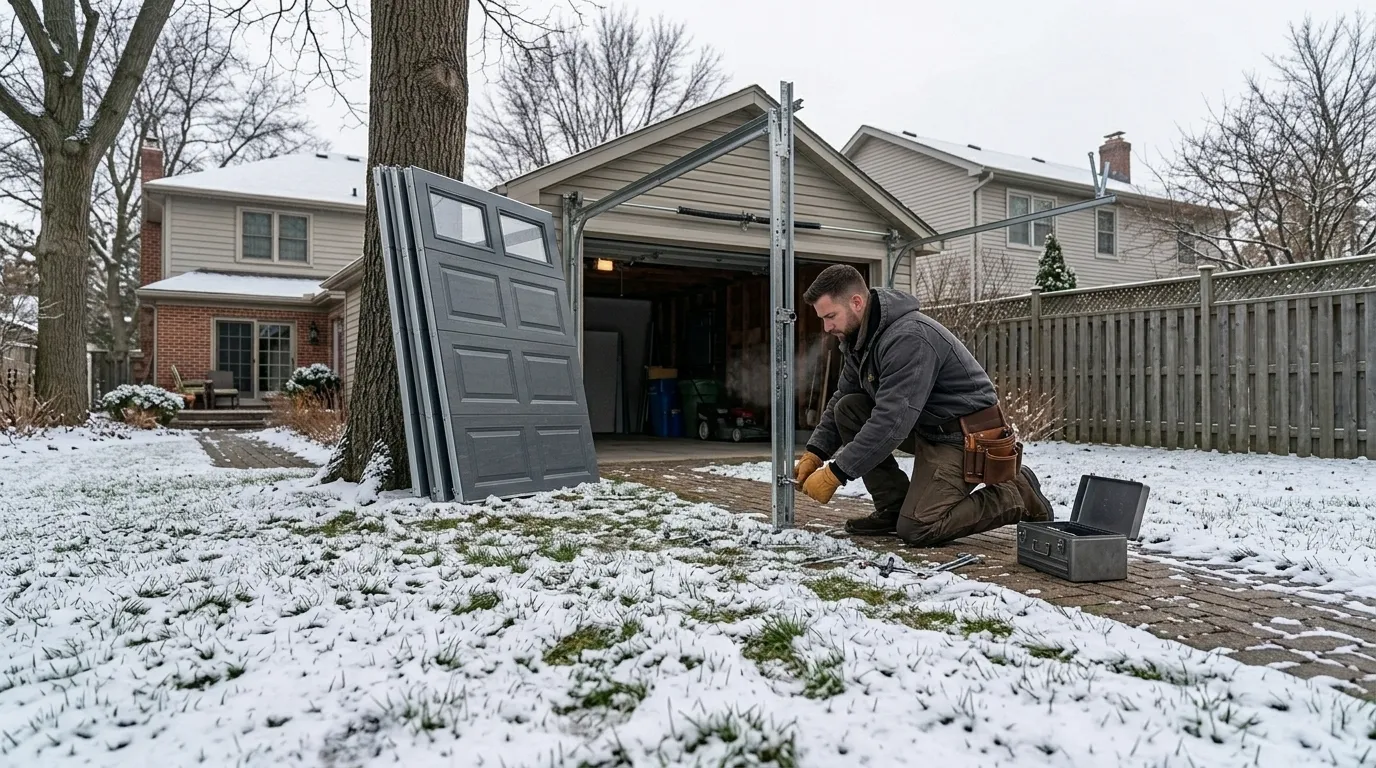
Garage Door Installation
New sectional doors sized and installed for the housing stock actually built in this area.
Learn more →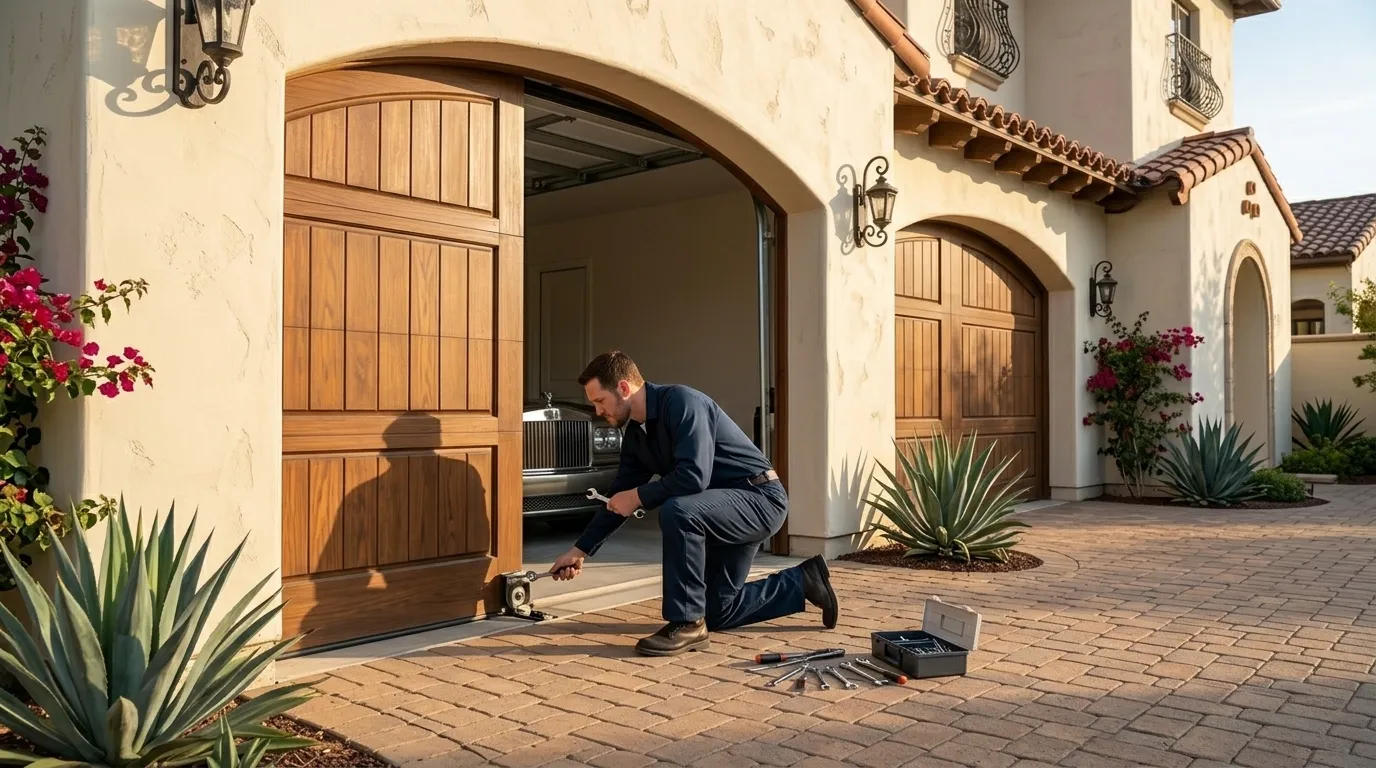
Garage Door Service
Tune-ups, lubrication, and safety checks that catch a small problem before it becomes a service call.
Learn more →Frequently Asked Questions
Why did my spring break on such a cold morning?
Cold steel is stiffer and more prone to sudden failure than warm steel, and if the spring is already old, the extra stress of low temperatures is often what pushes it past the breaking point. It's rarely a coincidence that most springs fail during the coldest stretch of winter rather than in July.
How old are most garage door springs in Eden Prairie?
Housing here was mostly built between 1957 and 2005, with a lot of it dating to the 1960s and 70s. If the spring hasn't been replaced since the house was built, it could be decades old, well past the point where fatigue is a real concern.
Can I just lubricate the spring to keep it going?
Lubrication helps reduce friction, but it doesn't reverse metal fatigue. If a spring is worn from age or cycle count, oil buys a little time at best. Once a spring is genuinely worn out, replacement is the only fix, not a repair.
Should I replace one spring or both?
On a double-spring setup, most owners here replace both at the same time even if only one has broken, since the second is usually close behind it in age and wear. Replacing them together tends to save a second service call within a year or two.
Have a Door That Needs a Second Opinion?
Call and describe what it is doing - we will tell you what it likely is.