
Eden Prairie, MN
Eden Prairie Garage Door Guide
Why Weather Seals and Draughts Matter More Here Than the Brochures Say
Eden Prairie homes built 1957-2005 face severe cold that turns worn weather seals into real draughts. Here's what local housing stock and climate mean for your door.
- Licensed & Insured
- Same-Area Service Calls
- Upfront Pricing
The Problem
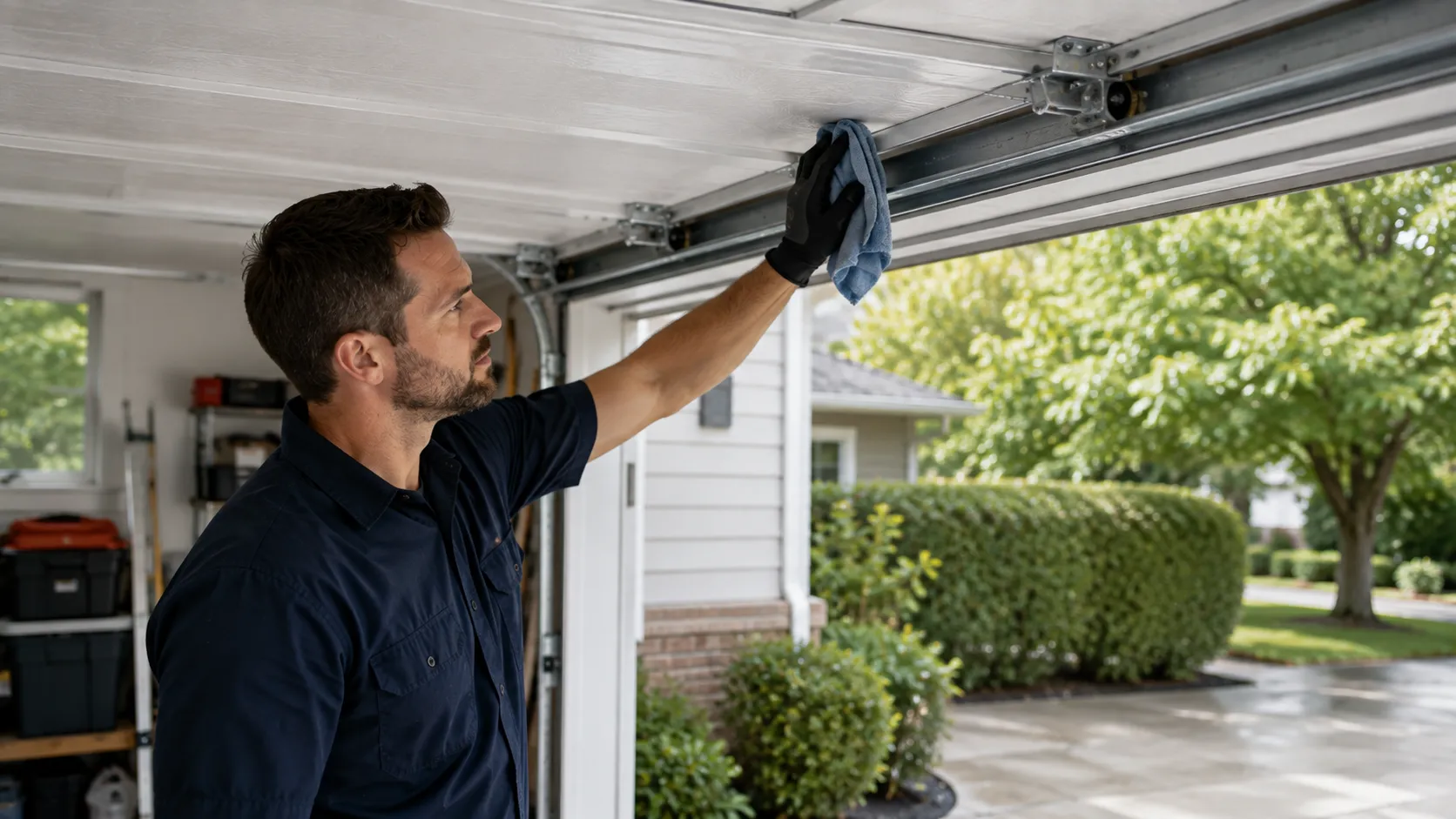
Eden Prairie draughts don't show up because a homeowner did something wrong. They show up because the seal at the bottom of the door, the one pressed against the slab every day for decades, is a wear part in a climate that punishes wear parts. Most houses in this service area were built between 1957 and 2005, with the bulk of the stock dating to the 1960s and '70s.
A vinyl bottom seal installed when a house went up in 1968 has been through roughly fifty winters of freeze-thaw cycling. It hardens, cracks, and pulls away from the aluminum retainer, and that's when you start feeling cold air along the slab on a January morning instead of seeing a visible gap. The seal looks intact from three feet away.
It isn't sealing.
The honest limitation here: a hardened seal is a five-minute fix and cheap. What it can't do is fix a door that's out of square, a slab that's settled unevenly, or a track that's bent from being backed into. If the draught is coming from one corner only and the seal there looks fine, the seal isn't your problem - the door's fit against the frame is, and that's a different job.
What Local Conditions Do
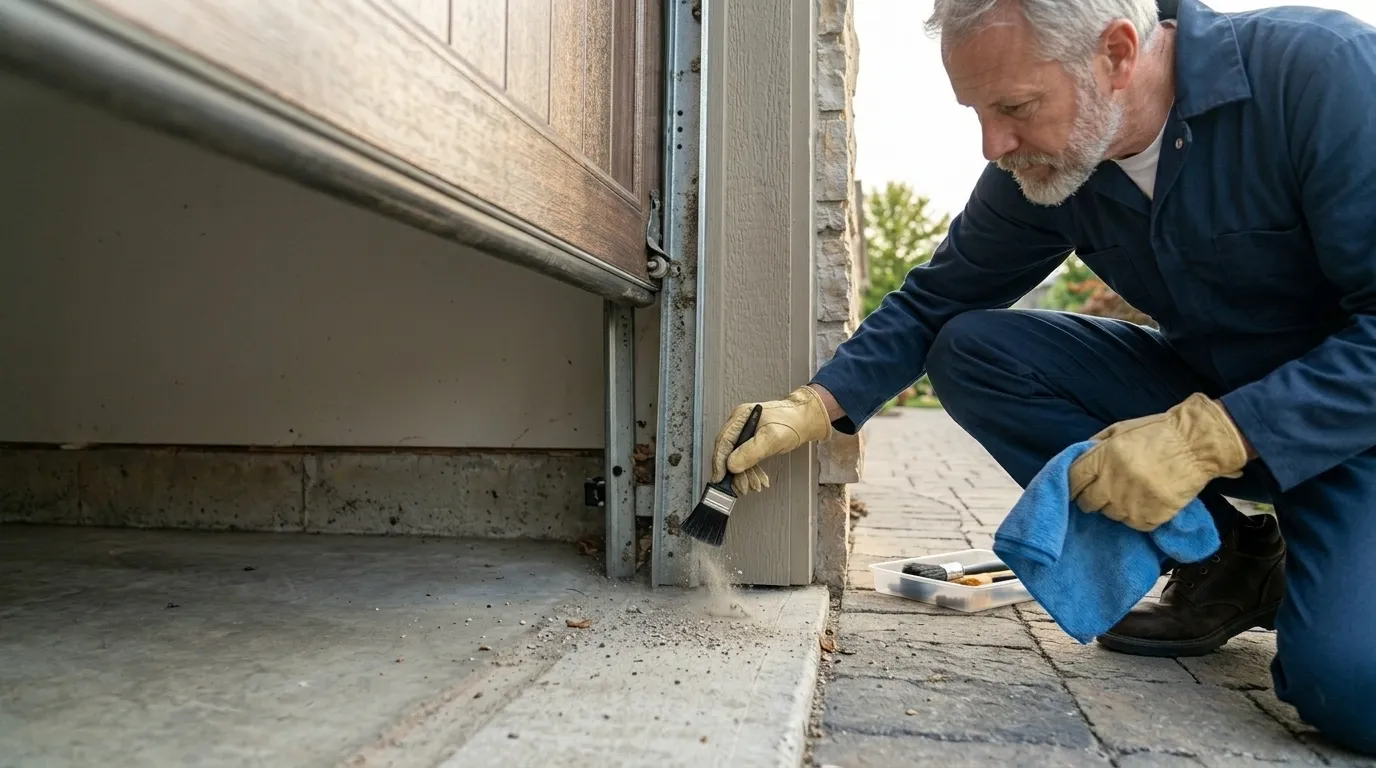
This area sits in a cold, severe climate band, which means the bottom seal isn't just aging on a calendar - it's aging under real thermal stress every winter. Vinyl seals go brittle below a certain temperature, and once brittle, they stop flexing into the small gaps a slab and door frame always have. Aluminum retainer track does the same thing at the corners: it contracts, the fasteners loosen slightly, and the seal shifts out of full contact with the floor.
None of this is a manufacturing defect. It's what happens to a rubber gasket that spends four months a year below freezing.
With over 100,000 owner-occupied houses across this service area, this isn't a rare complaint - it's the seasonal norm for a huge share of local garages. The fix scales with the cause: sometimes it's a $20 seal swap, sometimes it's re-squaring hardware that's shifted with the slab over the years. Either way, the diagnosis starts at the bottom of the door, not with the opener or the springs, even though those get blamed first.
What Changes With the Season
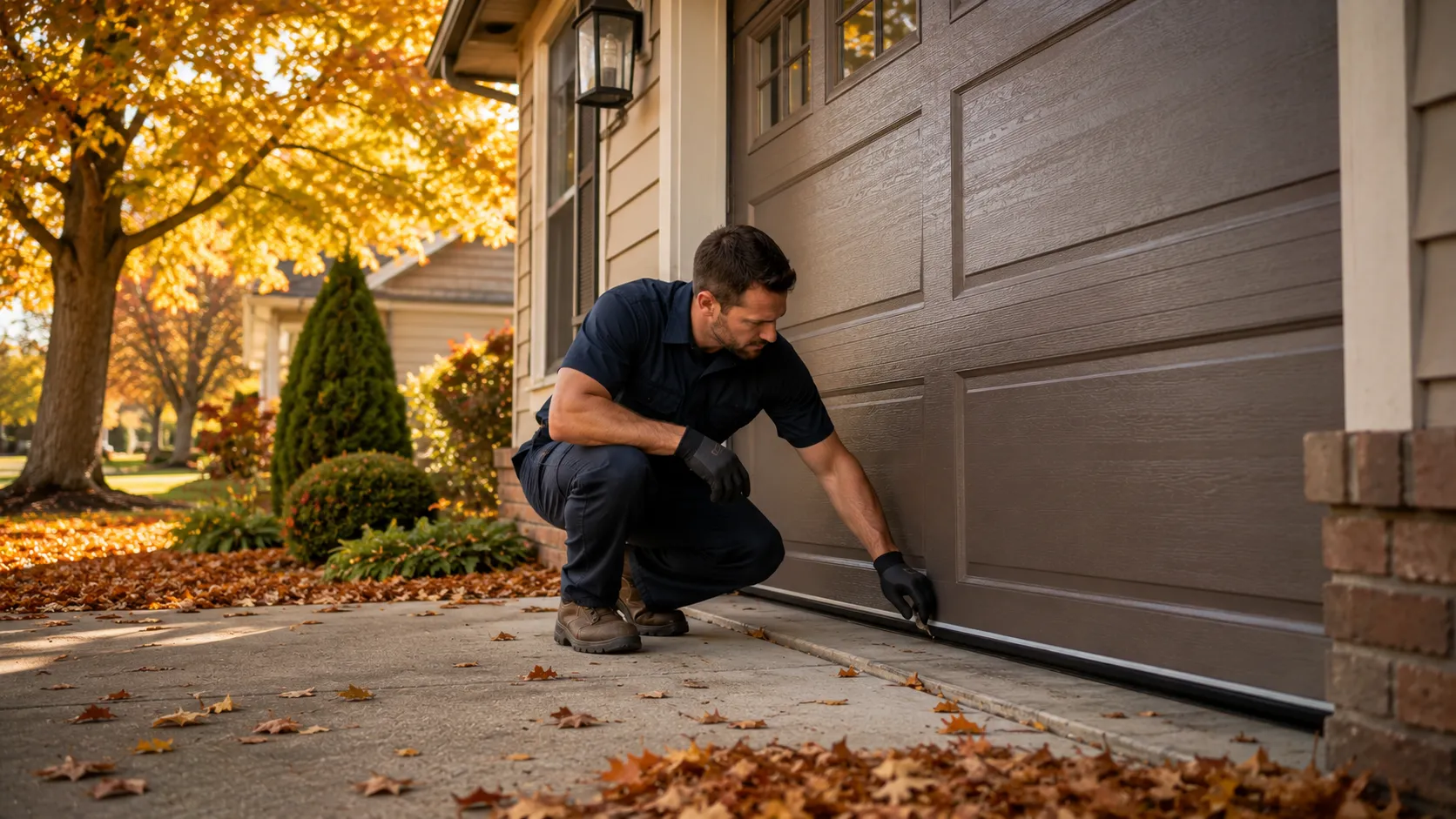
In a cold-severe climate, the failure pattern is predictable and it runs opposite to what people expect. Seals don't usually fail in the dead of winter - they fail during the freeze-thaw swings in early winter and again in March, when the seal is repeatedly compressing cold and expanding warm within the same week.
That cycling is what actually tears vinyl, more than steady cold ever does. If you're going to check your door once a year, late fall, before the first hard freeze, is the useful time, because a seal that's marginal in November will be cracked by January.
Houses built in the 1960s and '70s often have retainer track that's been painted over or repainted along with trim, and paint in the channel keeps a new seal from seating flush. That's a detail specific to older stock in this area, not something you'd find in a house built in the last decade with factory-sealed track.
What to Look At First
Start at the bottom seal, run your hand along the full width with the door down, and feel for gaps rather than looking for them - light doesn't always show a draught, but your hand will. Check both bottom corners specifically, since that's where retainer track loosens first. If the seal itself is hard, cracked, or flattened rather than round in cross-section, replace it before winter rather than mid-season, since a January service call in a cold-severe climate isn't always same-day depending on how the season is running.
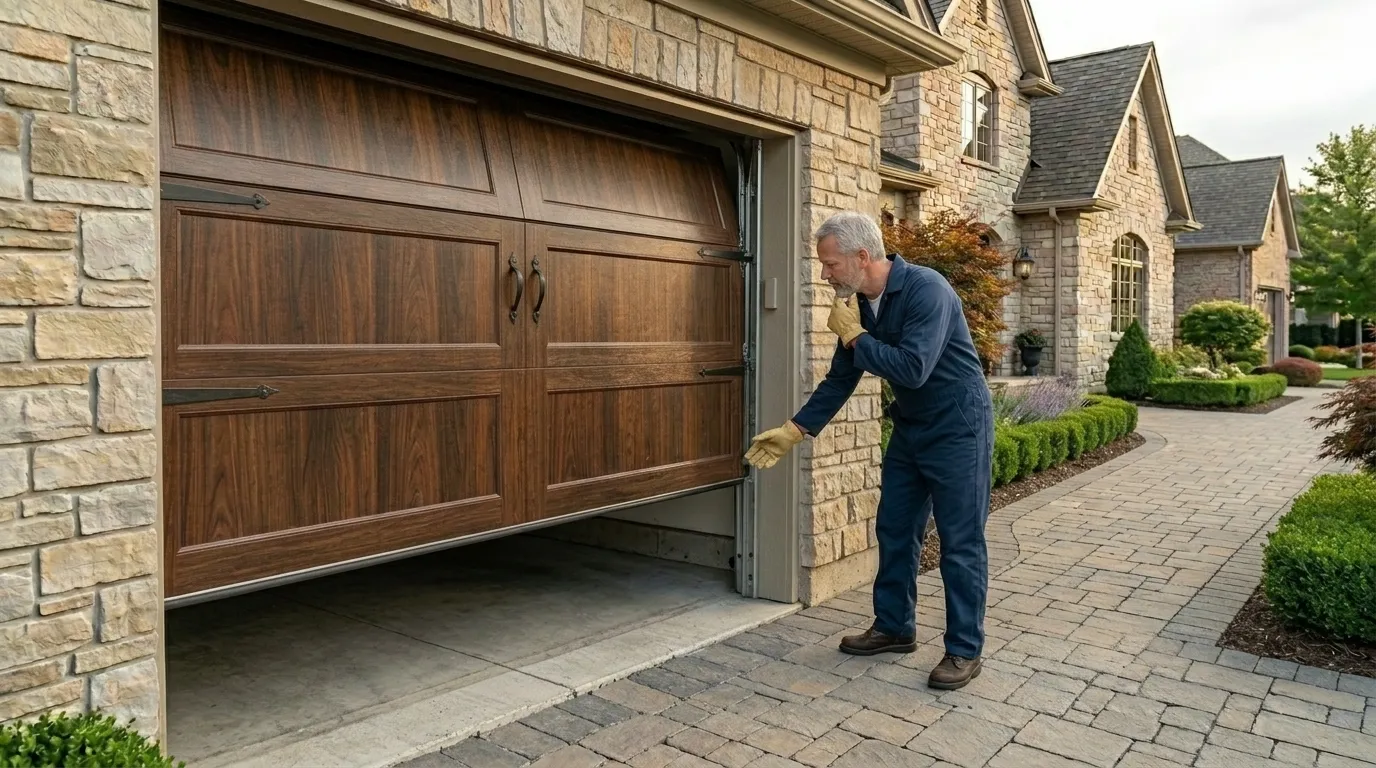
If the seal looks fine everywhere but you still feel air, the leak is likely the frame contact, not the door - and that's worth a real look before anyone quotes you a full weather-seal replacement you may not need. With median household income in this service area near $105,000, most owners here can afford to fix this properly rather than patch it, so it's worth doing once, correctly.
How We Can Help
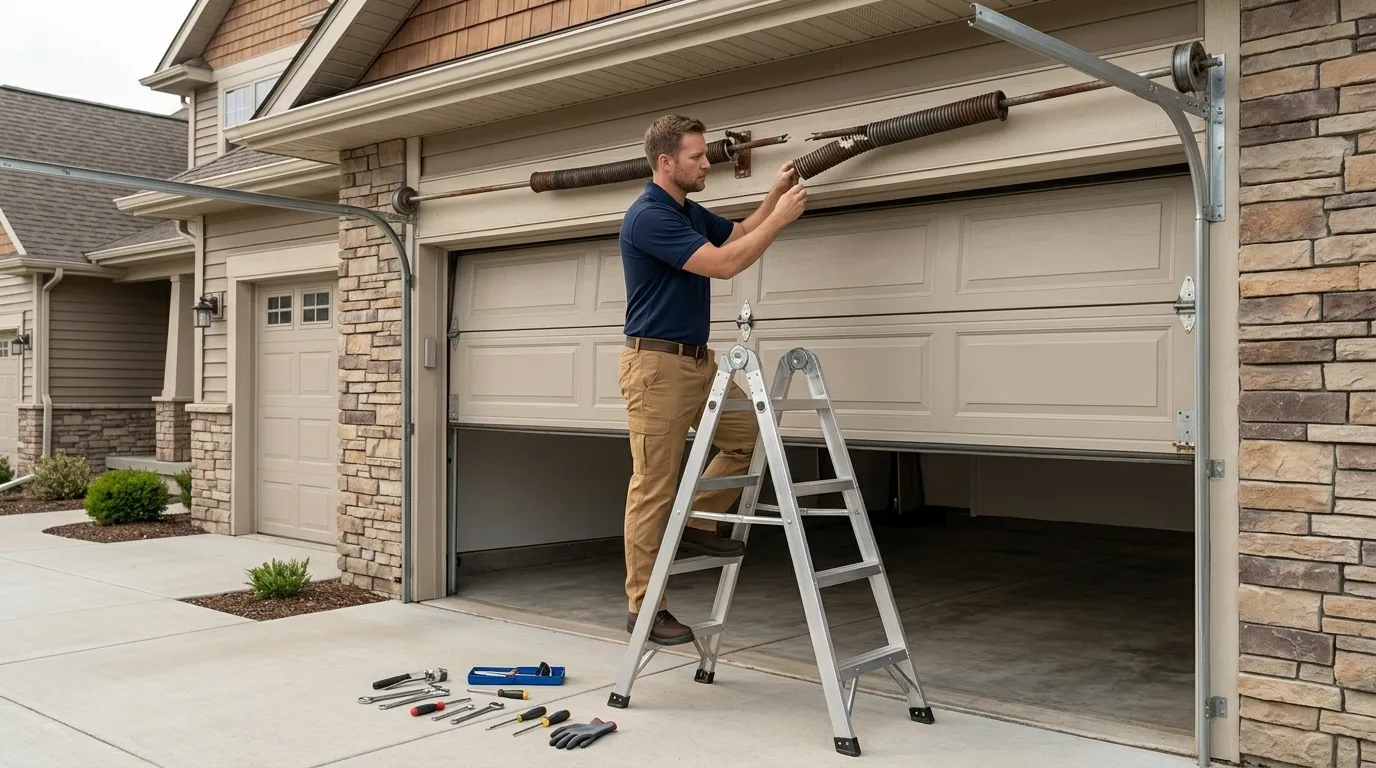
Garage Door Repair
Springs, cables, tracks, rollers, and openers fixed by a tech who explains the problem before touching anything.
Learn more →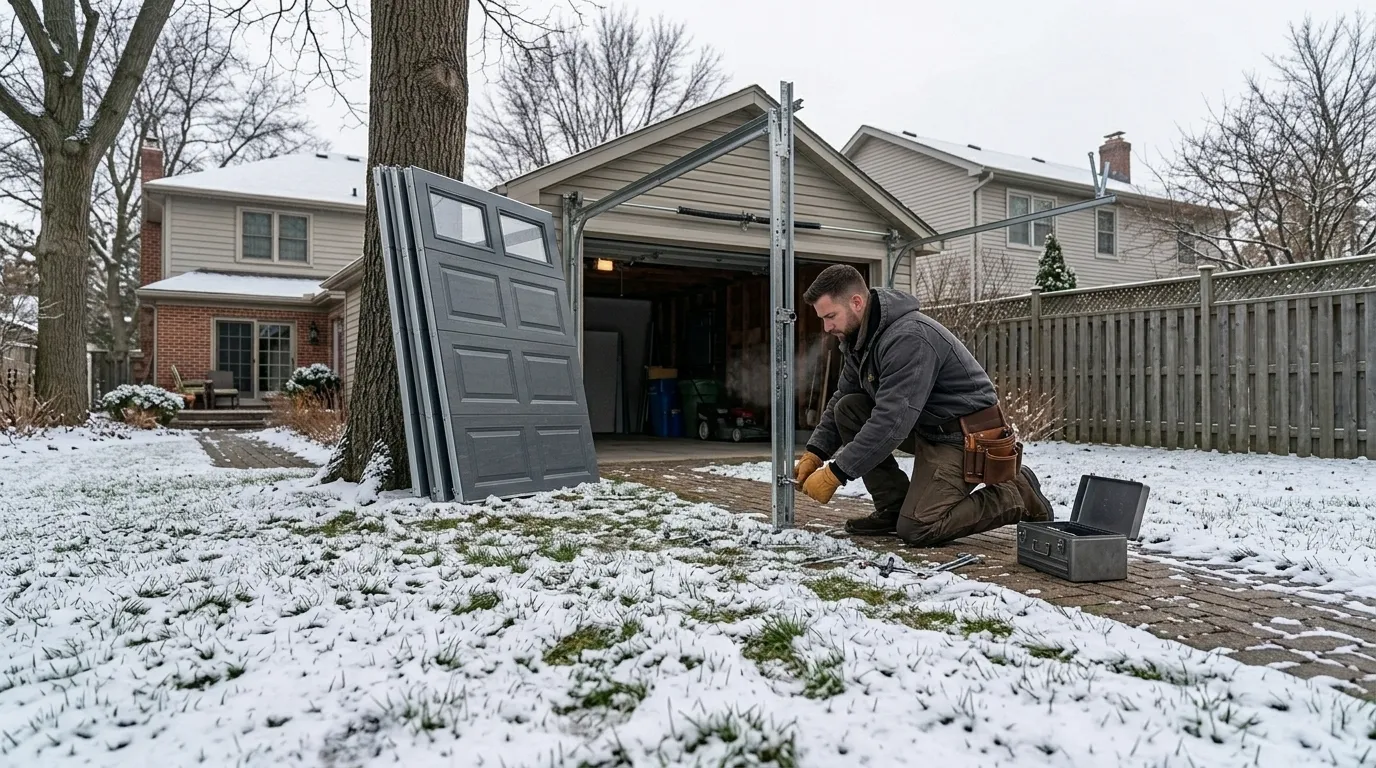
Garage Door Installation
New sectional doors sized and installed for the housing stock actually built in this area.
Learn more →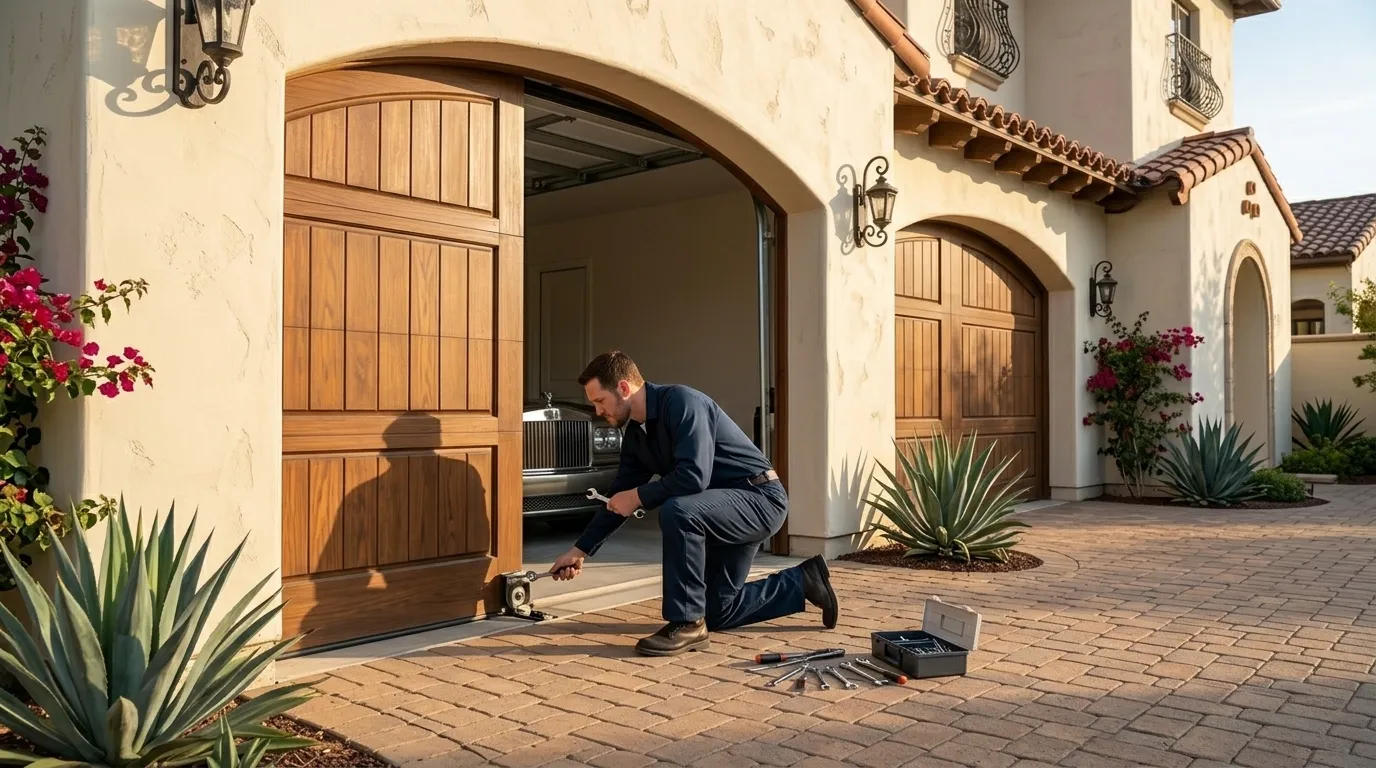
Garage Door Service
Tune-ups, lubrication, and safety checks that catch a small problem before it becomes a service call.
Learn more →Frequently Asked Questions
Why does my garage feel colder than it used to, even though nothing looks broken?
The seal at the bottom of the door hardens with age and with repeated cold-to-warm cycling, which is common in a cold-severe climate like this one. It can look intact while no longer sealing flush against the slab. Houses built in the 1960s and '70s, common across this area, are most often due for a seal replacement by now.
Should I replace the whole door for a draught problem?
No. A draught is almost always the bottom seal or the retainer track fit, not the door panel itself. Replacing a whole door over a seal issue is unnecessary spending. Full replacement makes sense when the door is out of square or the panels themselves are damaged, not for airflow at the floor.
When's the best time to check my seal before winter?
Late fall, before the first hard freeze. Vinyl seals in this climate tear most during freeze-thaw swings, not steady cold, so a seal that's marginal in November is often cracked by January. Checking early gives you time for a straightforward swap instead of a mid-winter fix.
Have a Door That Needs a Second Opinion?
Call and describe what it is doing - we will tell you what it likely is.