
Eden Prairie, MN
Eden Prairie Garage Door Guide
What That Noise From Your Garage Door Is Actually Telling You
Eden Prairie homes built 1957-2005 wear different parts than newer builds. Here's what grinding, popping, and slamming actually mean before you call for repair.
- Licensed & Insured
- Same-Area Service Calls
- Upfront Pricing
The Problem
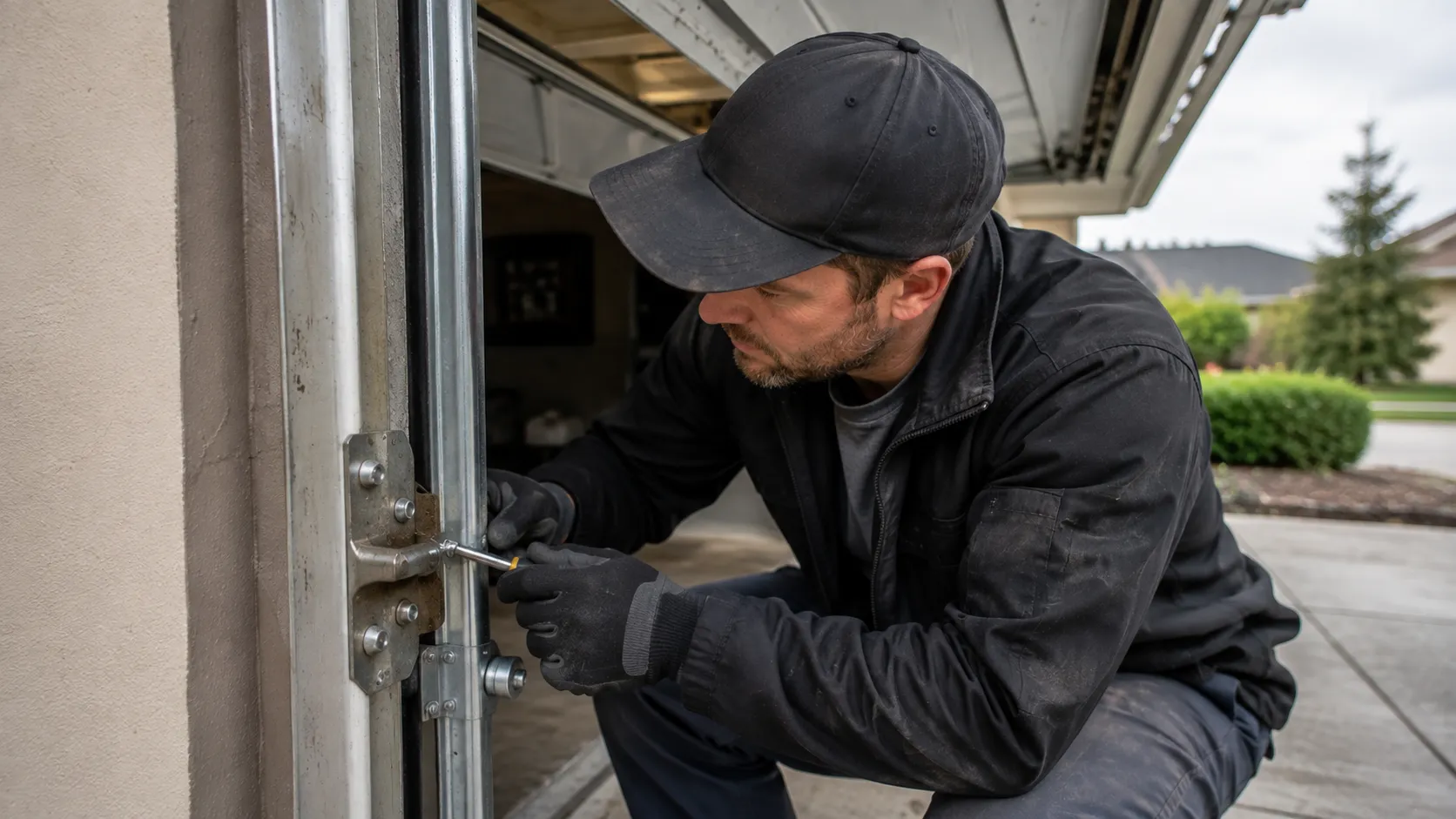
Most garage doors in Eden Prairie went up somewhere between 1957 and 2005, with the bulk of the stock dating to the 1960s and 70s across the area's named neighborhoods. That range matters because it means two very different generations of hardware are still in daily use on the same streets: doors from the 60s and 70s running original or near-original torsion springs and steel tracks, and doors from the 80s through 2005 running the extension-spring and roller setups that replaced them. A noise that's normal on one is a warning sign on the other.
A rhythmic thump every few inches usually points to a bent track or a flat spot on a roller, common on the older stock that's had decades to settle and shift. A sharp bang followed by the door refusing to move is almost always a broken spring, and on 1960s and 70s builds that spring is often original equipment nobody has serviced since installation. A high-pitched squeal is usually just a dry hinge or roller, cheap to fix if you catch it early and expensive to ignore.
We won't tell you every noise means a call is urgent. Most don't. But a loud pop and a door that won't budge means stop trying it and call, because a spring under tension can hurt someone.
What Local Conditions Do
Eden Prairie sits in a cold-severe climate band, and that changes what fails first on a door and when. Steel torsion springs lose a measurable amount of tension as temperature drops, so a spring that was already near the end of its life often gives out on the first hard cold snap rather than on a mild day. Lubricant on tracks and rollers stiffens the same way, which is why doors that ran quiet all summer start groaning and hesitating once nights get consistently cold.
Nylon rollers, common replacements on the area's older torsion setups, get brittle faster in sustained cold than the metal rollers they replaced, so a roller that's been squeaking for months can crack outright in a cold stretch instead of just wearing down gradually. None of this is exotic. It's ordinary metal and plastic responding to ordinary cold, but it means the same door behaves differently in January than it does in July, and a noise you'd shrug off in summer deserves a second look once the season turns.
What Changes With the Season
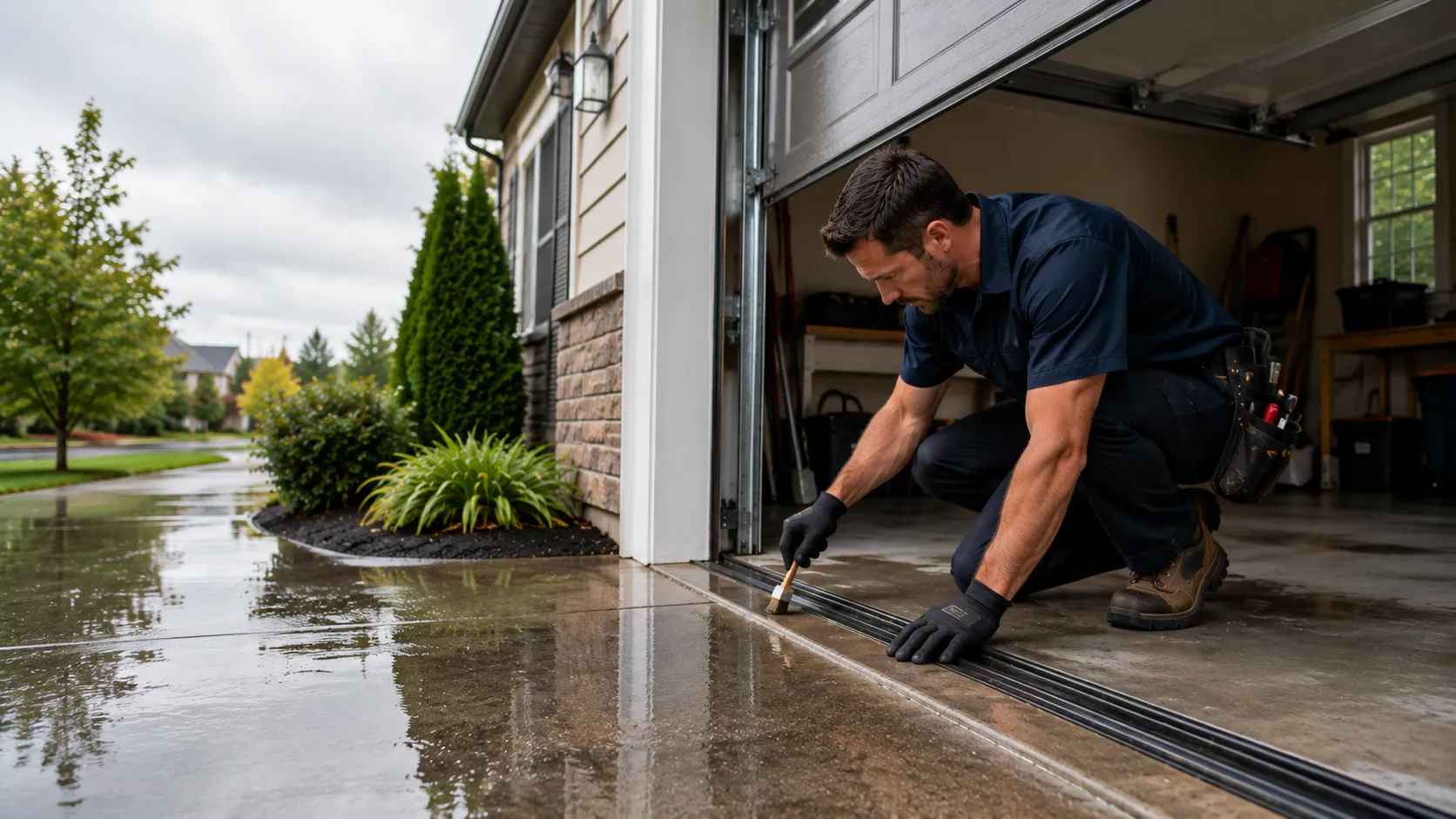
The swing between a Minnesota summer and a Minnesota winter puts more cycles of expansion and contraction on garage door hardware than milder climates do, and that shows up first in the fasteners and welds holding older track systems together. Bolts on 1960s and 70s installations that have never been re-torqued tend to work loose over enough seasonal cycles, and a loose track bracket is a common source of the banging or rattling noise homeowners notice mostly on windy or very cold days. Weatherstripping at the bottom of the door also hardens and cracks faster under repeated freeze-thaw swings, and once it splits, cold air finds its way in and the door itself can start rattling in its frame in a wind.
If you notice a noise that's worse on the coldest days and quieter in a warmer stretch, that's usually the hardware telling you it's fighting the temperature swing, not a sign the part is about to fail outright. But if the same noise starts happening regardless of temperature, that's the part wearing out, not the weather.
What to Look At First
Before you assume the worst, look at three things. First, the springs above the door: on a 1960s or 70s torsion setup, gaps in the coil or visible rust concentrated at one section usually mean it's near the end of its life, cold weather or not. Second, the rollers: reach up (door closed, opener unplugged) and spin one by hand.
If it doesn't turn smoothly or feels gritty, that's your popping or grinding noise. Third, the track brackets, especially near the top where the horizontal and vertical sections meet; a bracket that moves when you push on it is a loose-bolt problem, not a spring problem, and it's a cheaper fix. One honest limit here: we can tell you what a noise usually means, but we can't diagnose a specific door over the phone with certainty, especially on the older torsion setups common across this area's 1960s and 70s stock, where thirty years of prior repairs can hide the real cause.
A look in person is what settles it.
How We Can Help
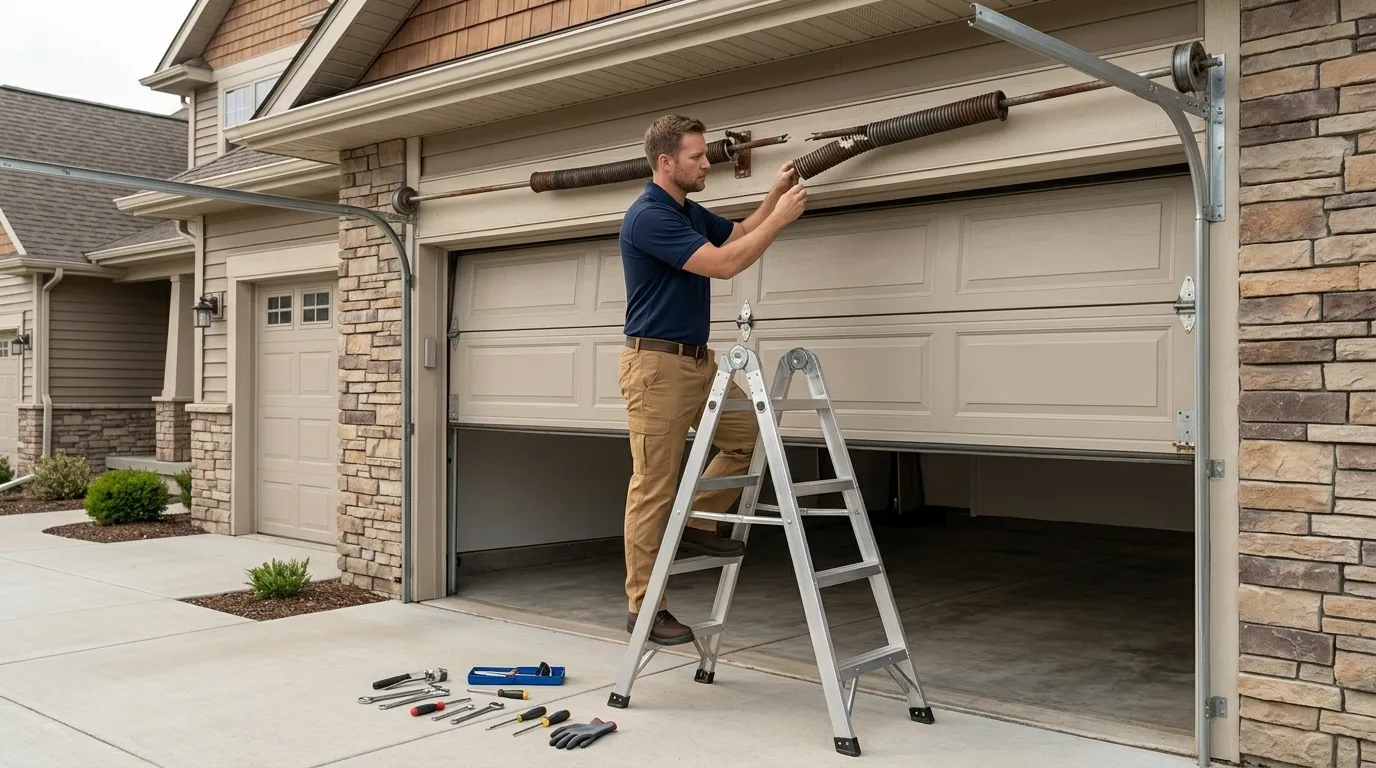
Garage Door Repair
Springs, cables, tracks, rollers, and openers fixed by a tech who explains the problem before touching anything.
Learn more →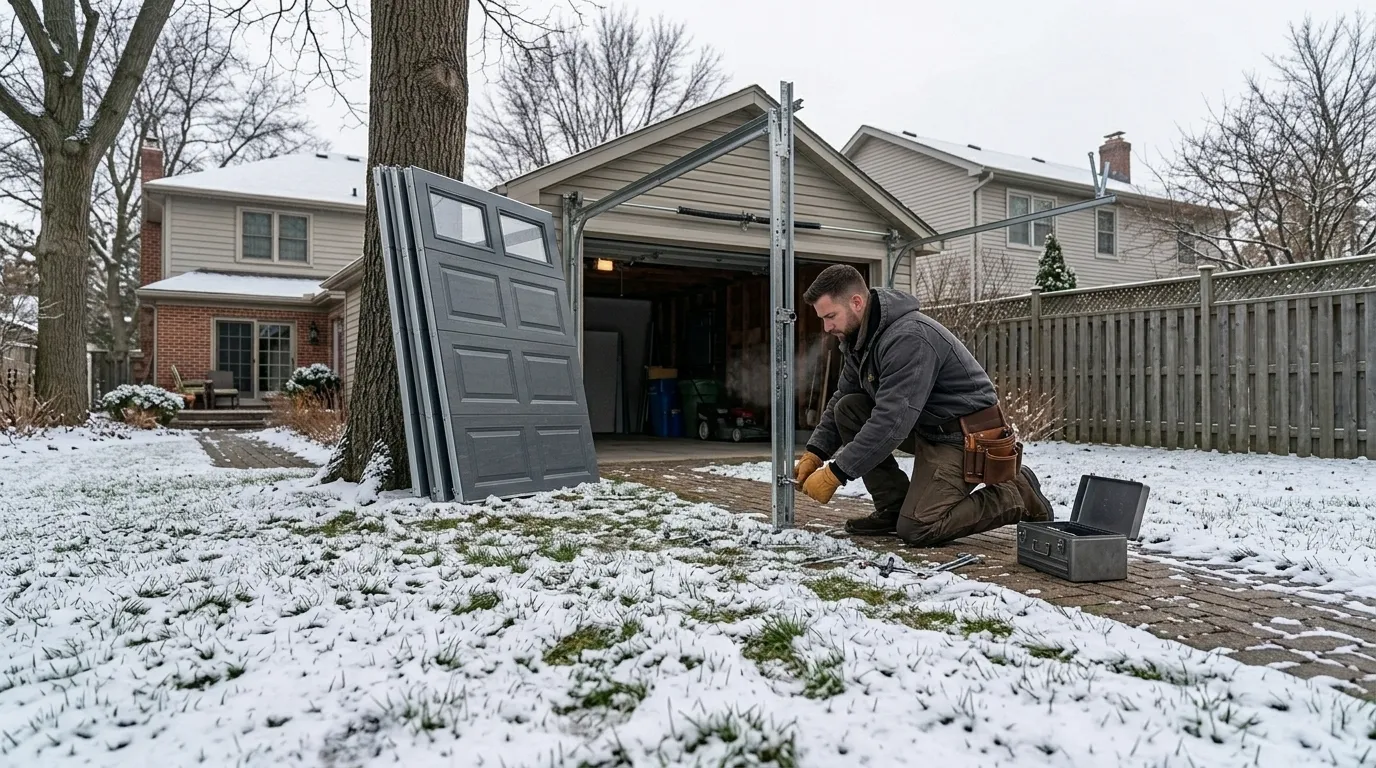
Garage Door Installation
New sectional doors sized and installed for the housing stock actually built in this area.
Learn more →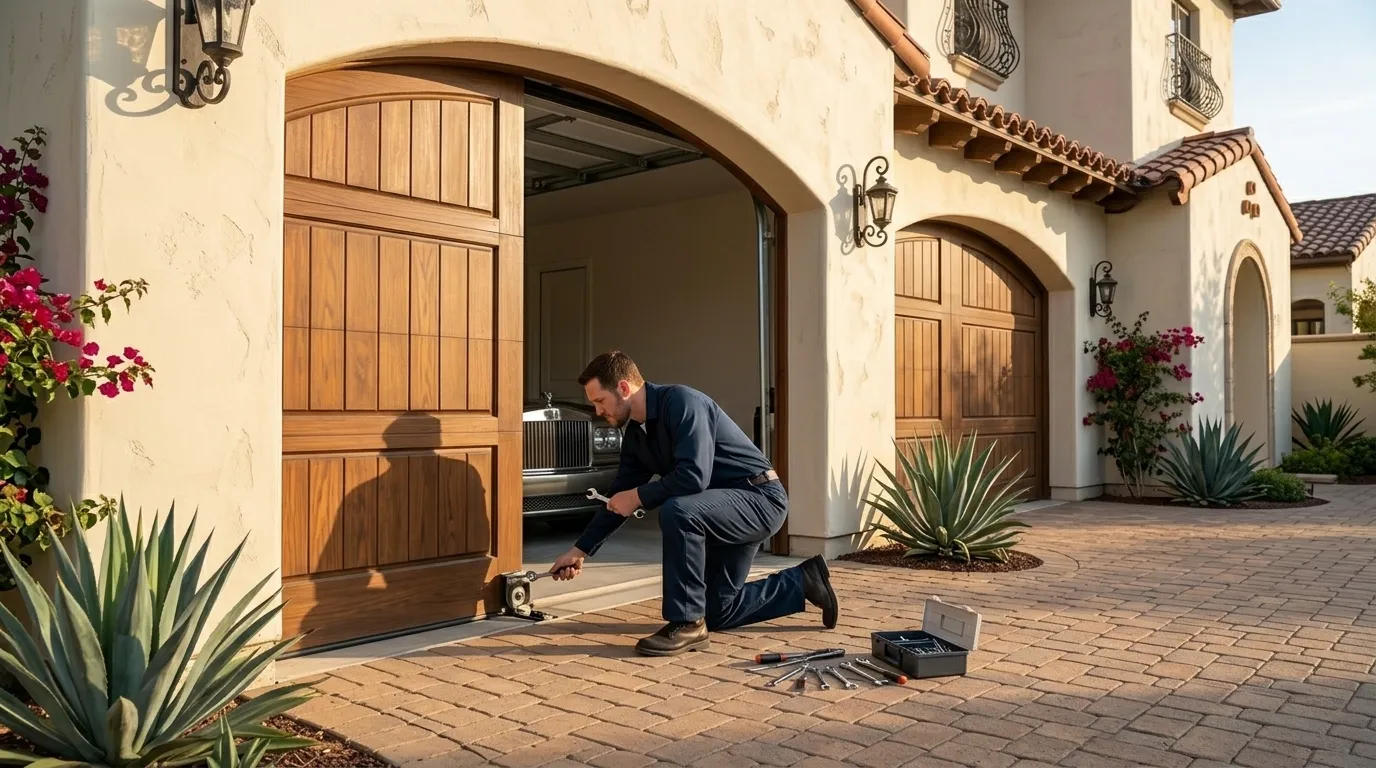
Garage Door Service
Tune-ups, lubrication, and safety checks that catch a small problem before it becomes a service call.
Learn more →Frequently Asked Questions
Why does my garage door only make noise in the winter?
Cold makes torsion springs lose tension and stiffens lubricant on tracks and rollers, which is common in a cold-severe climate like Eden Prairie's. A door that ran quiet all summer can start groaning or hesitating once temperatures drop, especially if the spring or rollers were already worn.
Is a popping sound always a broken spring?
Not always, but a loud pop followed by the door refusing to open or closing hard usually is. On Eden Prairie's older 1960s and 70s torsion setups, original springs are often still in service decades later, and cold weather is a common trigger for final failure.
My door bangs on windy days. Is that serious?
Usually it points to a loose track bracket that's worked free after years of seasonal expansion and contraction, common on older installations that haven't been re-torqued. It's worth checking before it wears the track itself, but it's rarely an emergency.
Can I tell if it's the rollers or the springs myself?
With the door closed and the opener unplugged, spin a roller by hand. Grinding or resistance points to rollers. Visible gaps or rust concentrated on one section of the coiled spring points to the spring. Beyond that, especially on older torsion hardware, an in-person look is more reliable than a phone diagnosis.
Have a Door That Needs a Second Opinion?
Call and describe what it is doing - we will tell you what it likely is.