
Eden Prairie, MN
Eden Prairie Garage Door Guide
What a Technician Checks First in Eden Prairie
Eden Prairie homes mostly date 1957-2005, many from the 1960s-70s wave, and our cold winters stress springs and tracks in specific ways. Here's the actual check order.
- Licensed & Insured
- Same-Area Service Calls
- Upfront Pricing
The Problem
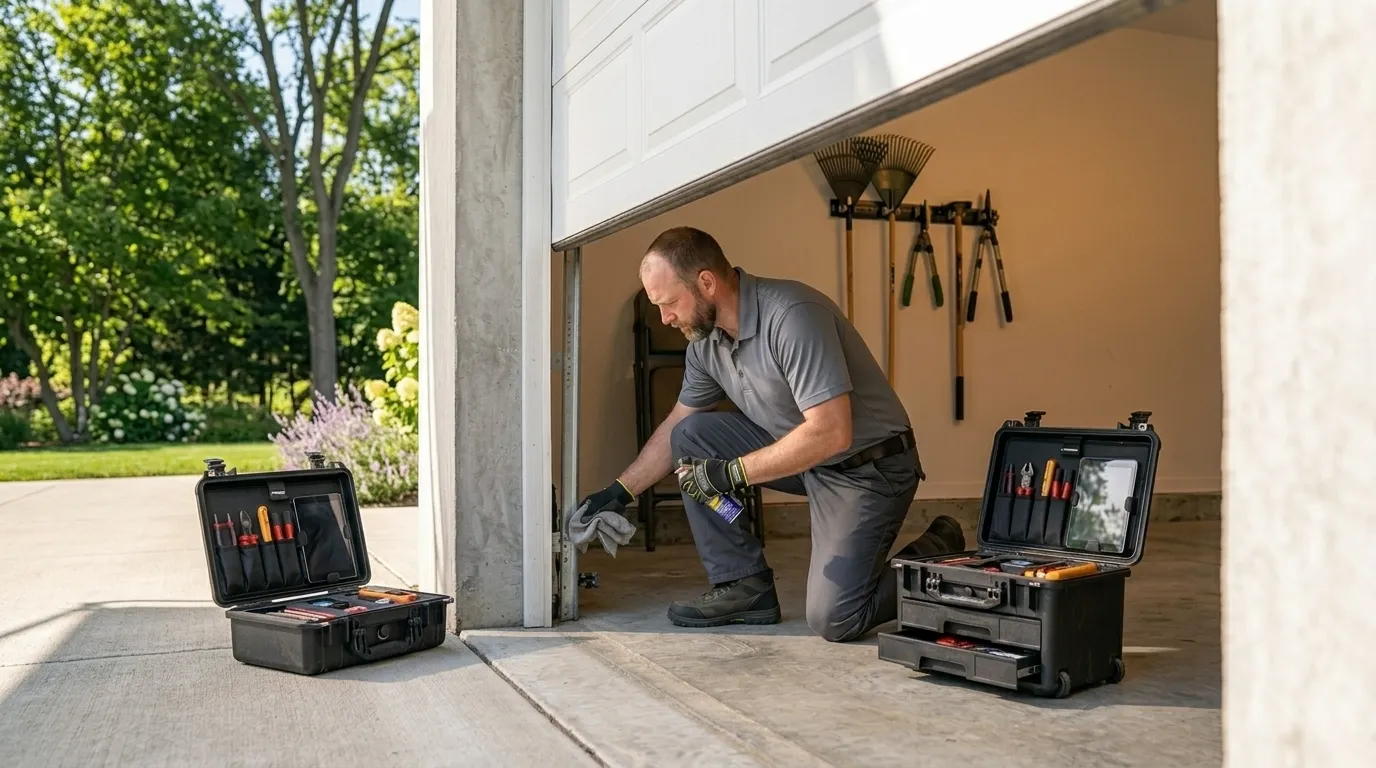
Most calls we get start the same way: a door that worked fine last week won't open, or opens with a bang, or grinds partway up and stops. The instinct is to blame the opener, because that's the part with the motor and the remote. But on houses built in the 1957-2005 range that make up this area, with a lot of stock clustered in the 1960s and 70s, the opener is rarely the actual failure point.
It's the part reacting to a problem somewhere else - a spring that's lost tension, a track that's shifted out of plumb, hardware that was never rated for the door it's holding. A technician who starts at the opener on a house this age is going to miss the real issue and hand you a bill for parts that weren't broken. The right order matters more here than it would on a newer build, because older systems have more places where one worn part quietly loads stress onto the next one down the line.
What Local Conditions Do
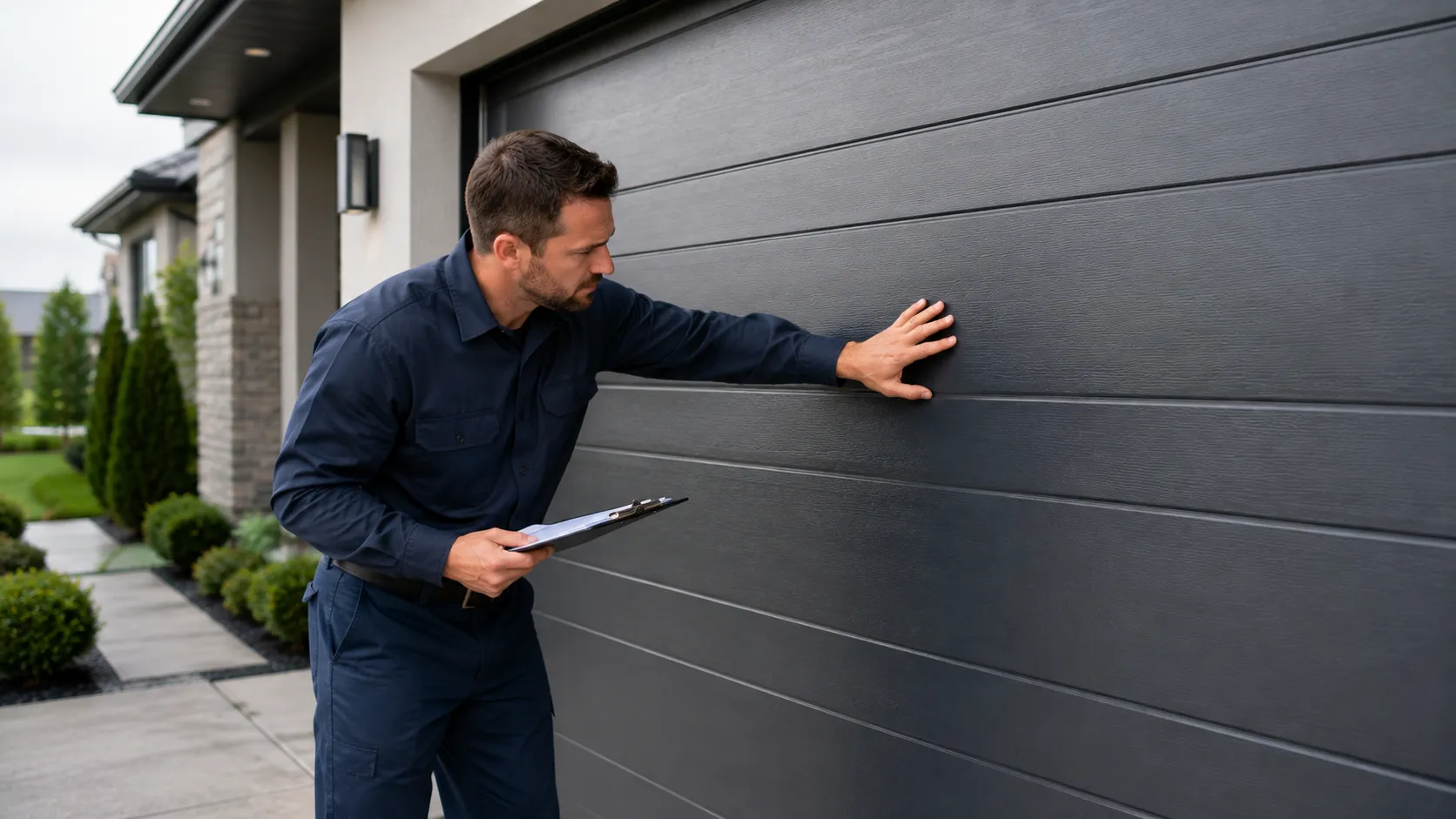
Eden Prairie sits in a cold-severe climate band, and that matters for garage doors in a specific way: steel expands and contracts with every freeze-thaw cycle, and torsion springs lose a measurable amount of lifting power once temperatures drop hard. A spring that's marginal in September can fail outright in January, not because anything broke that day, but because cold pulled the last bit of tension out of a spring that was already near the end of its life. Tracks behave the same way - metal that's slightly bent shows it more in cold weather, when the whole assembly is stiffer and less forgiving.
On a house from the 1960s or 70s, original hardware is often still in place, sized to specs that were normal then but light by today's standards. That's not a flaw in the house. It's just a fact about what a torsion spring rated in 1972 is doing fifty winters later.
What Changes With the Season
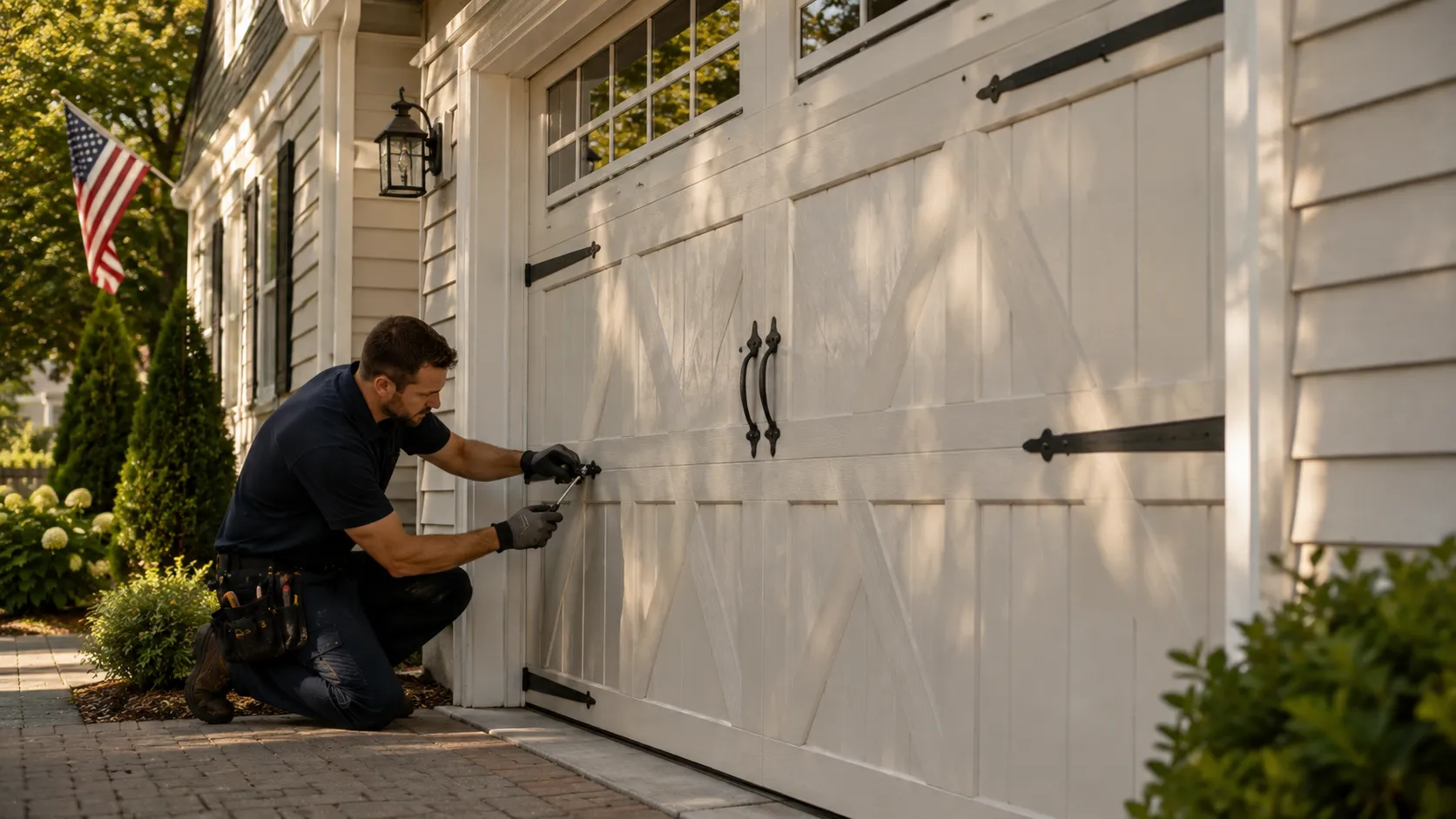
The failure pattern shifts with the calendar here. Late fall and early winter bring spring failures - the cold finishes off hardware that was already worn thin from a summer of cycling. Midwinter brings track and roller problems, because condensation inside an unheated garage freezes on rollers and hardware overnight, then the door has to fight through it every time it's used.
Spring brings opener issues, as sensors and gears that took a beating all winter finally give out. None of this is unique to any one house - but on the older stock common across this area, the sequence tends to repeat year after year because the same original parts are absorbing every cycle. A newer door with modern galvanized hardware handles the swings better.
That's the honest tradeoff: sometimes the fix isn't another repair, it's replacing hardware that's simply outlived its rated life.
What to Look At First
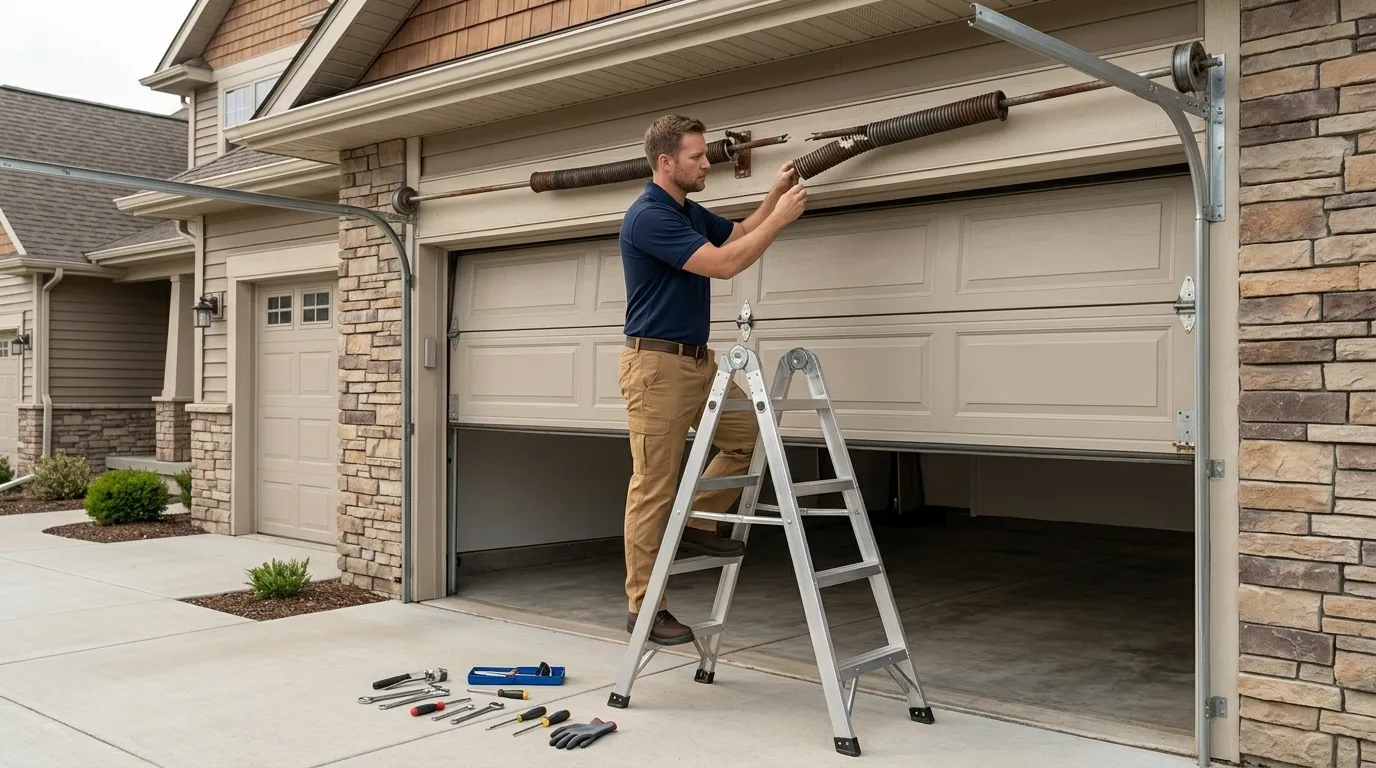
We start at the springs, because a spring under the wrong tension explains almost every downstream symptom - a door that's heavy to lift by hand, an opener straining and burning out early, cables that jump their drums. Next we check the track alignment and the rollers, since houses in this age range often still run steel rollers on tracks that have shifted slightly after decades of seasonal freeze-thaw movement. Only after that do we look at the opener itself - the gear, the sensors, the logic board.
It's worth saying plainly: not every older door is worth repairing piece by piece. If the springs, tracks, and opener are all near end of life at once, patching one part just moves the next failure a few months down the road, and replacement ends up cheaper than three separate service calls.
How We Can Help
Garage Door Repair
Springs, cables, tracks, rollers, and openers fixed by a tech who explains the problem before touching anything.
Learn more →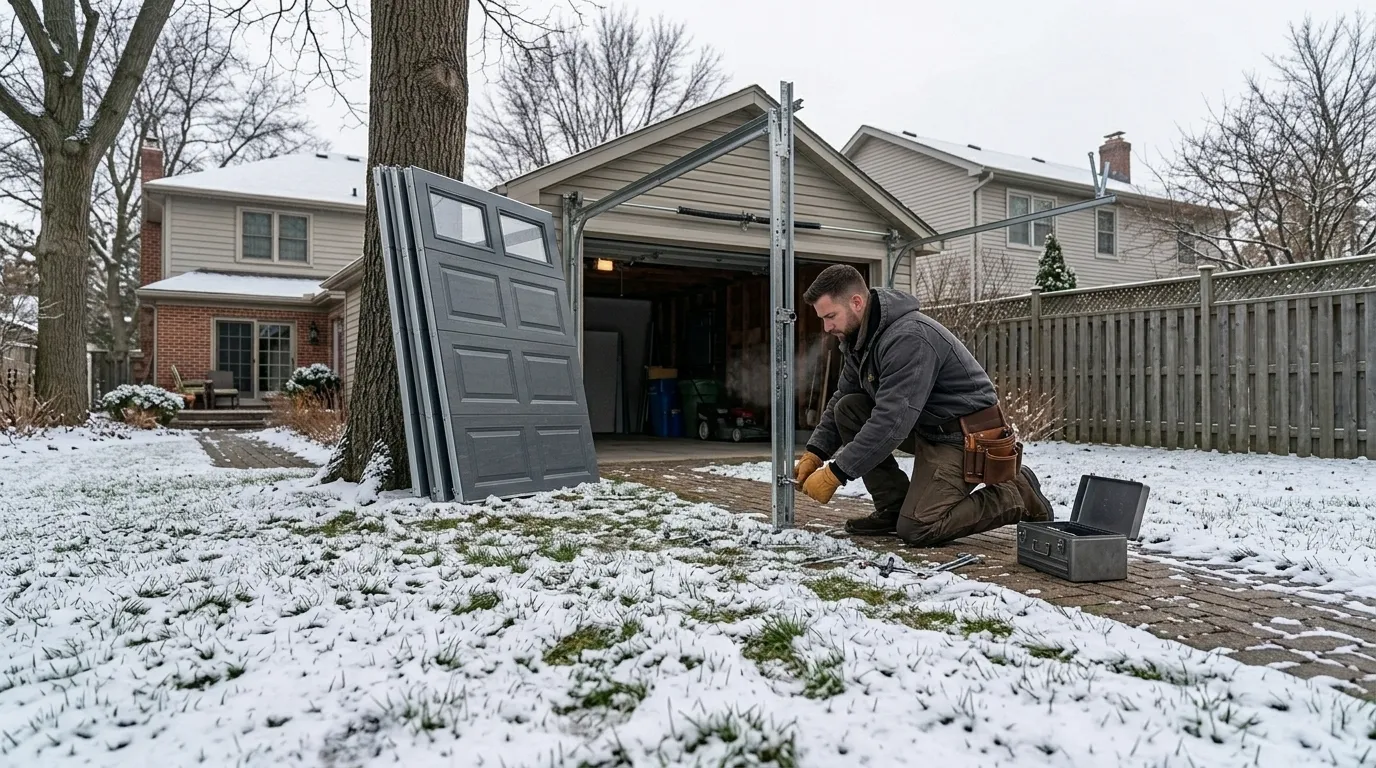
Garage Door Installation
New sectional doors sized and installed for the housing stock actually built in this area.
Learn more →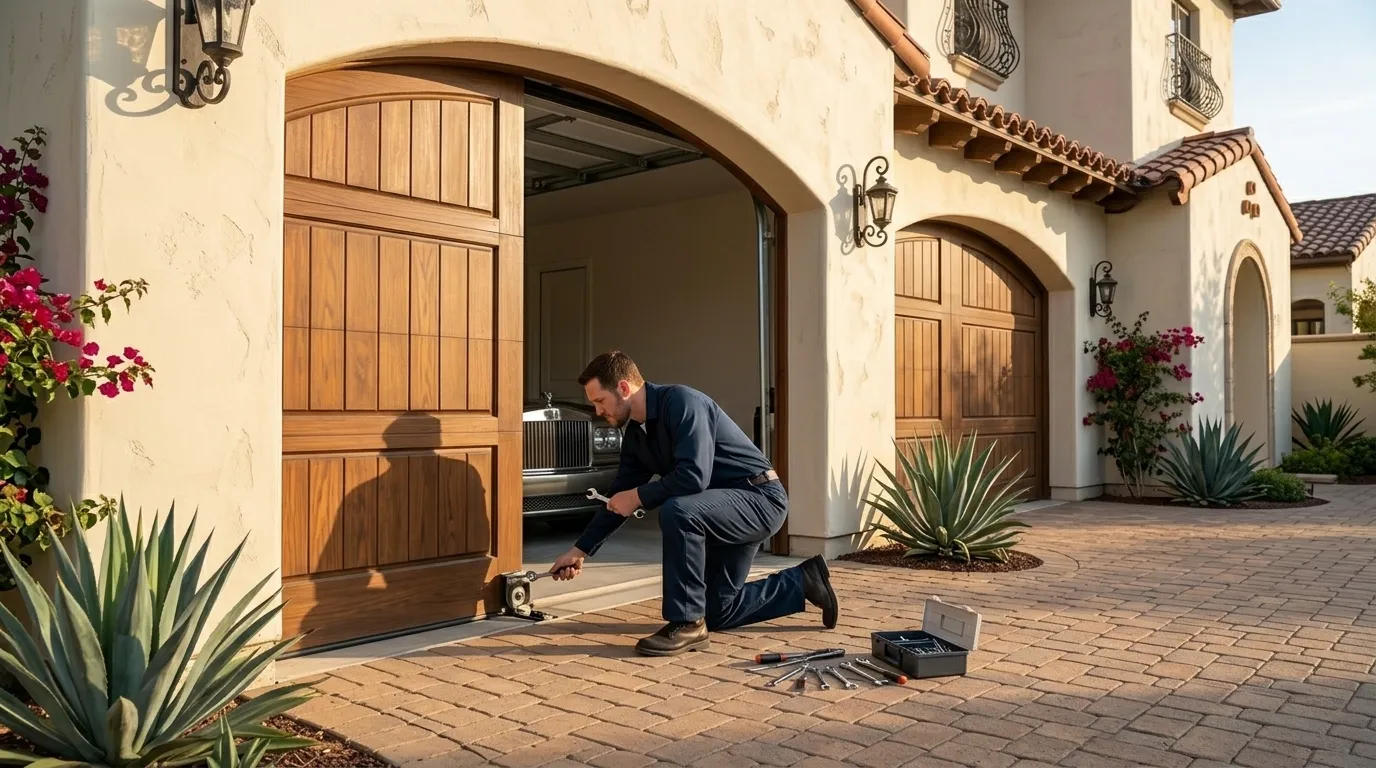
Garage Door Service
Tune-ups, lubrication, and safety checks that catch a small problem before it becomes a service call.
Learn more →Frequently Asked Questions
Why did my spring break in the middle of winter with no warning?
Cold weather doesn't cause the break so much as it removes the last bit of margin from a spring that was already near the end of its cycle life. On houses from the 1960s-70s wave common in this area, original springs are often decades past their rated cycle count, and a hard freeze is often what finally finishes them off.
Is it normal for my door to feel harder to lift in winter?
Some stiffness is normal - cold metal and thicker lubricant both add resistance. But if the door feels noticeably heavier than it did in summer, that's usually a spring losing tension, not just cold weather, and it's worth having checked before it fails outright.
My house was built in the 1970s - should I worry about the hardware?
Not automatically, but it's worth a look. Hardware from that era was built to specs that were standard then but lighter than what's used now, and after decades of freeze-thaw cycles it's common for springs or rollers to be near the end of their service life even if they haven't failed yet.
Should I fix the opener first if the door won't open?
Usually not. In most cases we see, the opener is straining against a spring or track problem rather than failing on its own. Starting at the opener often means paying for a part that wasn't the actual issue.
Have a Door That Needs a Second Opinion?
Call and describe what it is doing - we will tell you what it likely is.